The 2025 collection of best practices has been derived from applications that cities submitted to the European Capital of Smart Tourism competition. The report showcases the selection of best practices in each category (Accessibility, Sustainability, Digitalisation, Cultural heritage and creativity).
4.1 BEST PRACTICES IN ACCESSIBILITY
4.1.1 ACCESSIBILITY FOR ALL
- 4.1.1.1 Inclusivity for all: Lviv
- 4.1.1.2 Accessible infrastructure: Barcelos; Braga; Genoa; Messina; Porto
- 4.1.1.3 Involvement of local communities: Braga; Brussels; Torino
- 4.1.1.4 Accessibility to rehabilitation: Lublin; Lviv
- 4.1.1.5 Accessible beaches: Las Palmas de Gran Canaria; Porto
- 4.1.1.6 Wider access to cultural activities: Brussels; Kaunas
- 4.1.1.7 Accessible tourism management: Kaunas
- 4.1.1.8 Inclusivity to different social groups: Brussels; Gaziantep
4.1.2 ACCESSIBILITY FOR INFORMATION
4.1.3 ACCESSIBILITY OF MOBILITY
- 4.1.3.1 Sustainable accessibility options: Genoa; Porto
- 4.1.3.2 Promotion of cycling and walking paths: Lahti; Sakarya:
- 4.1.3.3 Accessible public transport: Brussels; Konya; Lahti
- 4.1.3.4 Digital solutions in mobility accessibility: Lahti; Porto
4.2 BEST PRACTICES IN SUSTAINABILITY
4.2.1 COMBATTING OR ADAPTING TO CLIMATE CHANGE
- 4.2.1.1 Sustainable Action Plans: Porto
- 4.2.1.2 Mitigating pollution: Torino
- 4.2.1.3 Sustainability education: Taranto
- 4.2.1.4 Eco-friendly tourism publications; Kaunas
- 4.2.1.5 Sustainable resource management; Lahti
4.2.2 PRESERVING OR ENHANCING THE NATURAL ENVIRONMENT
4.2.3 SUSTAINABLE TOURISM MANAGEMENT
- 4.2.3.1 Tourism development: Genoa; Porto
- 4.2.3.2 Actions mitigating tourism seasonality: Arezzo; Barcelos; Brussels; Klaipėda; Matosinhos; Messina; Taranto
- 4.2.3.3 Creation of sustainable tourism sites: Konya; Skopje
4.2.4 SUSTAINABLE MOBILITY
- 4.2.4.1 Sustainable public transport: Coimbra
- 4.2.4.2 Sustainable urban mobility planning: Brussels; Genoa; Lahti; Lublin
- 4.2.4.3 Sustainable outdoor tourism: Torino
4.2.5 SUSTAINABLE INVOLVEMENT OF LOCAL COMMUNITIES
- 4.2.5.1 involvement of Local Communities in Tourism Planning: Arezzo; Kaunas; Klaipėda; Torino
- 4.2.5.2 Involving Local Communities in Sustainable Initiatives: Braga
- 4.2.5.3 Sustainability education for local communities: Braga; Konya; Lublin; Lviv
4.3 BEST PRACTICES IN DIGITALISATION
4.3.1 FACILITATING INFORMATION FOR SPECIFIC TARGET GROUPS
- 4.3.1.1 Digital Visitor Platforms: Brussels; Lahti; Las Palmas de Gran Canaria; Porto; Sakarya
- 4.3.1.2 Digital City Maps: Lviv
- 4.3.1.3 Use of Artificial Intelligence in Communication: Kaunas; Torino
- 4.3.1.4 Digital Applications Enhancing the Visitor Experience: Braga; Gaziantep; Genoa; Konya
- 4.3.1.5 Digital Tours and City Exploration: Coimbra; Klaipėda; Messina
- 4.3.1.6 Virtual Exploration of the City: Braga; Coimbra; Skopje; Torino
4.3.2 COLLECTING INFORMATION FOR SMART MANAGEMENT
- 4.3.2.1 Open Data for Tourism Management: Gaziantep; Lahti; Las Palmas de Gran Canaria
- 4.3.2.2 Smart Urban Management: Genoa
- 4.3.2.4 Digital Solutions for Business: Lahti; Lublin; Porto: Torino
4.3.3 TRANSFORMATION INTO DIGITAL KNOWLEDGE SHARING
- 4.3.3.1 Digital Access to information: Barcelos; Kaunas
- 4.3.3.2 Digitalisation in cultural spaces: Genoa; Konya
- 4.3.3.3 Enhancement of Digital Skills: Arezzo; Barcelos; Brussels; Matosinhos; Skopje; Torino
4.3.4 INNOVATIVE MOBILITY THROUGH DIGITALISATION
4.4 BEST PRACTICES IN CULTURAL HERITAGE & CREATIVITY
4.4.1 REVIVAL OF CULTURAL HERITAGE
- 4.4.1.1 Cultural events & Festivities: Brussels; Gaziantep; Konya; La Palmas de Gran Canaria; Lublin; Porto
- 4.4.1.2 Dedicated Heritage Years: Brussels; Genoa
- 4.4.1.3 Restoration of Cultural Heritage Sites: Konya; Lahti; Messina; Porto
- 4.4.1.4 Transformation of Cultural Heritage Sites and Urban Spaces: Kaunas; Lahti; Matosinhos; Torino
- 4.4.1.5 Establishing Cultural Institutions: Kaunas
- 4.4.1.6 Preserving Traditions: Barcelos; Coimbra; Klaipeda; Lahti
- 4.4.1.7 Creating alternative heritage tours: Arezzo; Braga; Coimbra; Klaipėda; Lublin; Messina; Taranto
- 4.4.1.8 Preserving Culinary Heritage: Lublin; Torino
4.4.2 CULTURAL HERITAGE USAGE FOR NEW CREATIVITY
- 4.4.2.1 Use of new technologies: Arezzo; Brussels; Lviv; Skopje
- 4.4.2.2 Creating New Cultural Spaces: Barcelos; Lviv; Skopje
4.4.3 MAINTAINING CULTURAL HERITAGE

Download the Compendium of Best Practices

Leading Examples of Smart Tourism practices in Europe from the 2025 European Capital of Smart Tourism competition This report has been prepared in 2025 for the European Commission, DirectorateGeneral for Mobility and Transport (DG MOVE)
Leading Examples of Smart Tourism practices in Europe from the 2024 European Capital of Smart Tourism competition.
This report has been prepared in 2024 for the European Commission, Directorate-General Internal market, Industry, Entrepreneurship and SMEs (DG GROW)
The 2023 collection of best practices has been derived from the applications the cities submitted to the competition. The report showcases the selection of best practices in each category (Accessibility, Sustainability, Digitalisation, Cultural Heritage and Creativity) and solely presents and relies on the data that the cities have submitted in their applications.
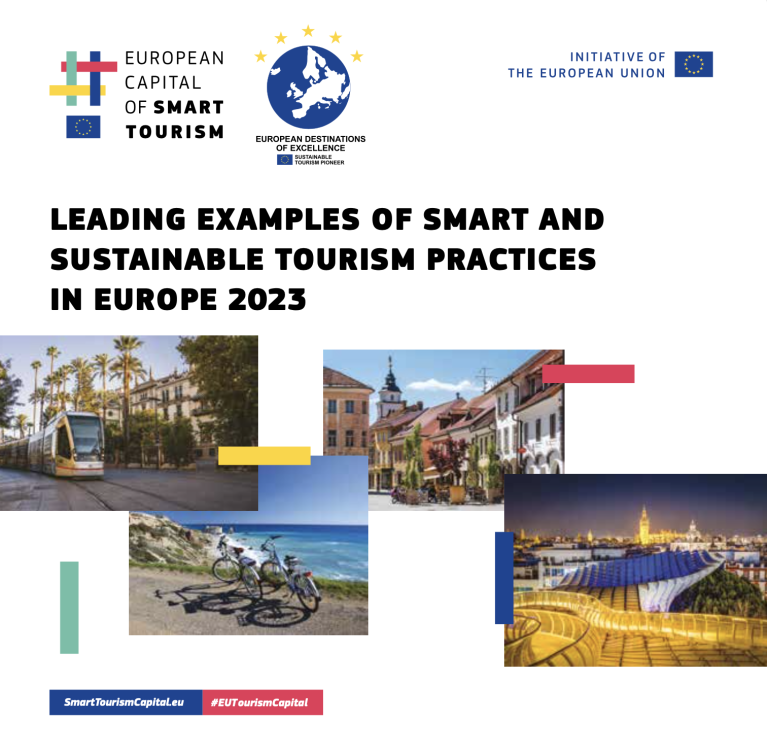
The selection of best practices compiled in this booklet has been derived from the applications that cities submitted to the 2023 competition and solely presents and relies on the information and data that the cities have submitted in their applications.

The 2022 collection of best practices has been derived from applications that cities submitted to the European Capital of Smart Tourism competition. The report showcases the selection of best practices in each category (Accessibility, Sustainability, Digitalisation, Cultural heritage and creativity). The purpose of this document is to enhance and facilitate the exchange of best practices in promoting innovative and smart measures and initiatives for tourism destinations in EU Member States. The report aims at raising awareness about smart tourism tools, measures and projects, sharing the best practices in tourism implemented by cities and strengthening peer-to-peer learning and innovative development of tourism in the EU in general.